


















Welcome to the Institute of Children’s Literature and the Institute for Writers. Our online, self-paced courses have been launching writers’ careers since 1969.
Work with a published author and professional editor as your one-on-one mentor.
Together you’ll explore what inspires you, develop engaging characters, hook your reader with dynamic plots, conflicts, and resolutions, and discover (and learn to appreciate!) the art of constructive feedback & revision.
You’ll transform your stories into sellable manuscripts.
Think of our one-on-one method of instruction and time-tested curriculum as your launchpad—providing the structure, guidance, and support you need to stay focused on your craft and prepare your writing for today’s publishing marketplace.
Whether you write for Children, Teens or Adults, fiction or nonfiction, we’ve got you covered.
Transform your ideas into publishable stories, articles, a picture book, or the opening 3 chapters of a novel. Research the market and complete at least one manuscript suitable for submission to a children’s publication.
Students who’ve completed this course have been published in Highlights, HarperCollins, Scholastic, Chicken Soup for the Soul, Cricket, Yeehoo Press, and Beaming Books.
Write children’s fiction and nonfiction articles. Kickstart your writer’s portfolio of professionally edited and critiqued manuscripts. Target your writing to specific age levels and today’s children’s magazine guidelines.
Students who’ve completed this course have been published in Highlights, High Five, Spider, Baby Bug and Yeehoo Press.
Lizzie Fleming
Breaking into Print Graduate
Explore magazines for the adult readership level to find your niche: fiction or nonfiction—you’ll learn both. Refine rough concepts into polished stories and articles. Complete at least two manuscripts suitable for submission to your targeted magazine publications.
Students who’ve completed this course have been published in Highlights, Mutha Magazine, Discretionary Love, Grande Dame Literary Journal and Faith, Hope & Fiction.
Develop the techniques of fiction and nonfiction professional-level writing. Plan and write stories and articles with universal appeal. Maximize your publication potential by tailoring your work to meet specific editorial requirements.
Students who’ve completed this course have been published in Keys for Kids
You’d be hard-pressed to find another online writing school that offers one-on-one mentoring and direct feedback from an instructor—someone who understands the industry as a published author and professional editor themselves.
Writing is one thing. Teaching is another. The Institute’s instructors are pros at both.
Christmas Eve Blizzard, Abordale Publishing
“Writing is rewriting. That’s where you’ll create your story or article, in draft after draft.”
Gravedigger, Fountain Blue Publishing
“I once read about a novelist whose daily goal was two well-polished pages, which seemed trifling until I realized he was producing over seven hundred pages a year. It’s like the proverb of the journey that begins with a single step-or in this case with a single word on a blank sheet of paper.”
Secrets of Greymoor, Candlewick Press
“What do you care most about and why? That’s where a story begins, since the best ideas will not come from your head but from your heart, the place where ideas and emotional truth meet.”
Outside of our courses, we offer a curated collection of free resources, packed with applicable tips for published and aspiring authors alike.
Read, listen, stay up to date—access what you need, when you need it.
These tools are evergreen, built to support your writing journey. We encourage you to reference these resources to inspire your next project, beat writer’s block, or brush up on your technique with pointers from the pros.
Being part of a writing community enables you to interact with fellow writers to share, ask, find, answer, inform, expand, and network.
Check out our communities. You’ll find kindred spirits here.
As a student at the Institute, you’ll look beyond the end of your manuscript to the business of selling and publishing your work.
Your instructor will teach you how the publishing industry works, help you navigate publication challenges that apply to your unique story, and will collaborate with you to fine-tune your manuscript to meet submission standards.
You don’t have to do it alone! We’ll help you demystify the marketplace and rise to the challenge.
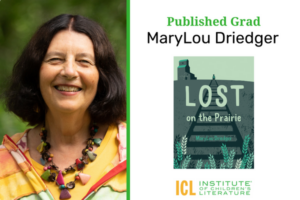
MaryLou Driedger
Lost on the Prairie, Heritage House.
‘I write a blog post every day and have done so now for ten years. That constant writing practice is vital. With my novel writing I always just tell myself to take one step at a time. Write the next chapter. Take the next course. Go to the next writing conference. Read at the next writer’s group meeting. Submit to the next publisher.’
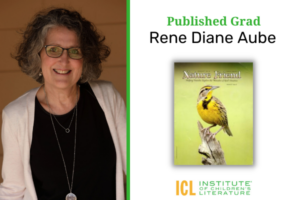
Diane Aube
Slug Love, Nature Friend magazine,
‘I learned how to write far better material, what makes a story publishable, and how to properly submit my work to editors. One-on-one tutoring through the Institute of Children’s Literature has been invaluable in the progression of my writing journey.’
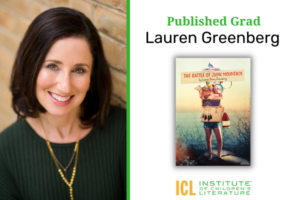
Lauren Greenberg
The Battle of Junk Mountain, Running Press Kids
‘THE BATTLE OF JUNK MOUNTAIN began as an idea for an ICL assignment. I loved having a mentor guide me through the creation of the first draft. Having deadlines kept me focused and forced me to finish, which can be a huge hurdle for any writer.’